
Lasers & Photonics Transmit light and carry heat away
High-power lasers need optics that stay clear and gain media that stay cool. Diamond serves both roles.
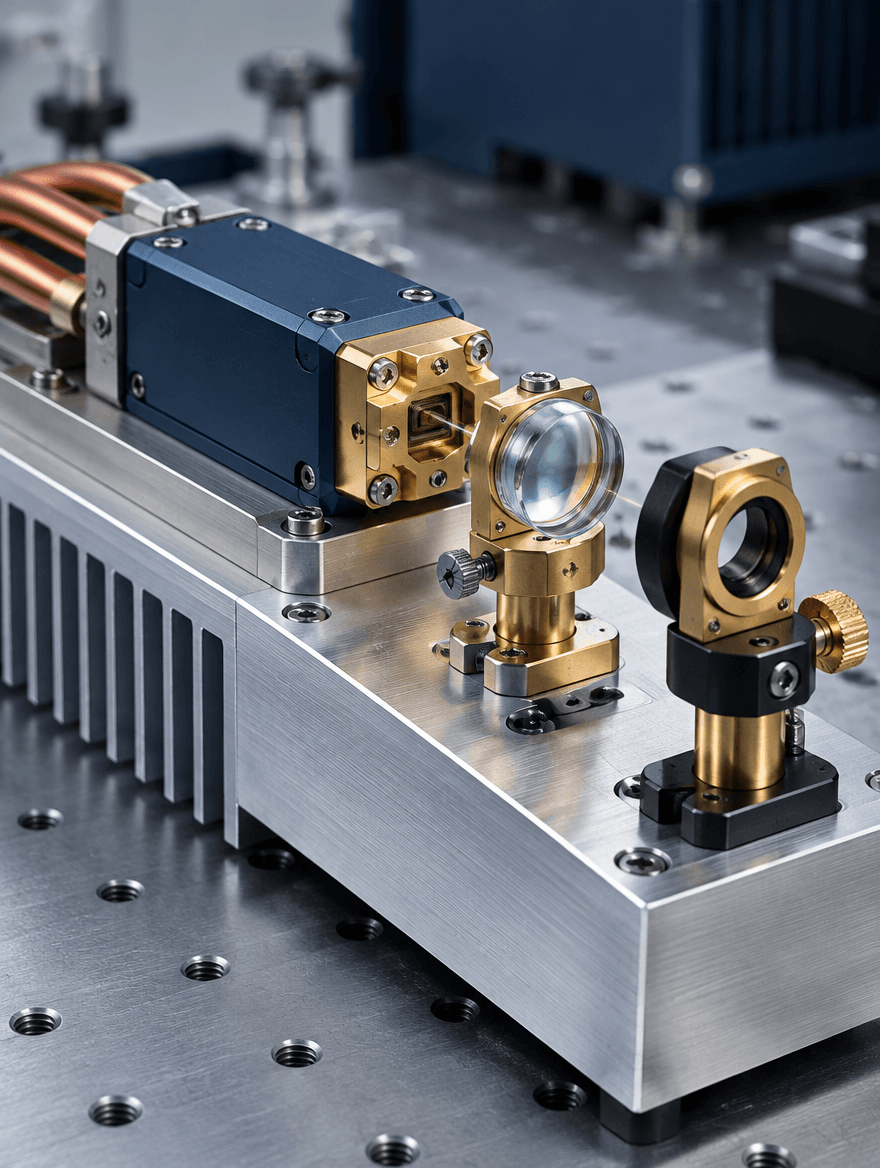
Where diamond helps
Diamond is used in lasers and photonics as an optical window, lens or beam splitter, and as a heat-conducting mount for gain material. It transmits over a wide wavelength range and conducts heat very well. Buyers match grade, thickness and surface quality to the operating wavelength and power.
The challenge
Thermal lensing
Heat in laser crystals and optics distorts the beam and limits usable power.
Absorption at your wavelength
Transmission varies with grade and wavelength, so a general claim is not enough.
Mounting without strain
Optics and gain media must be held and cooled without introducing stress or damage.
How diamond helps
Light handling with Optical Components
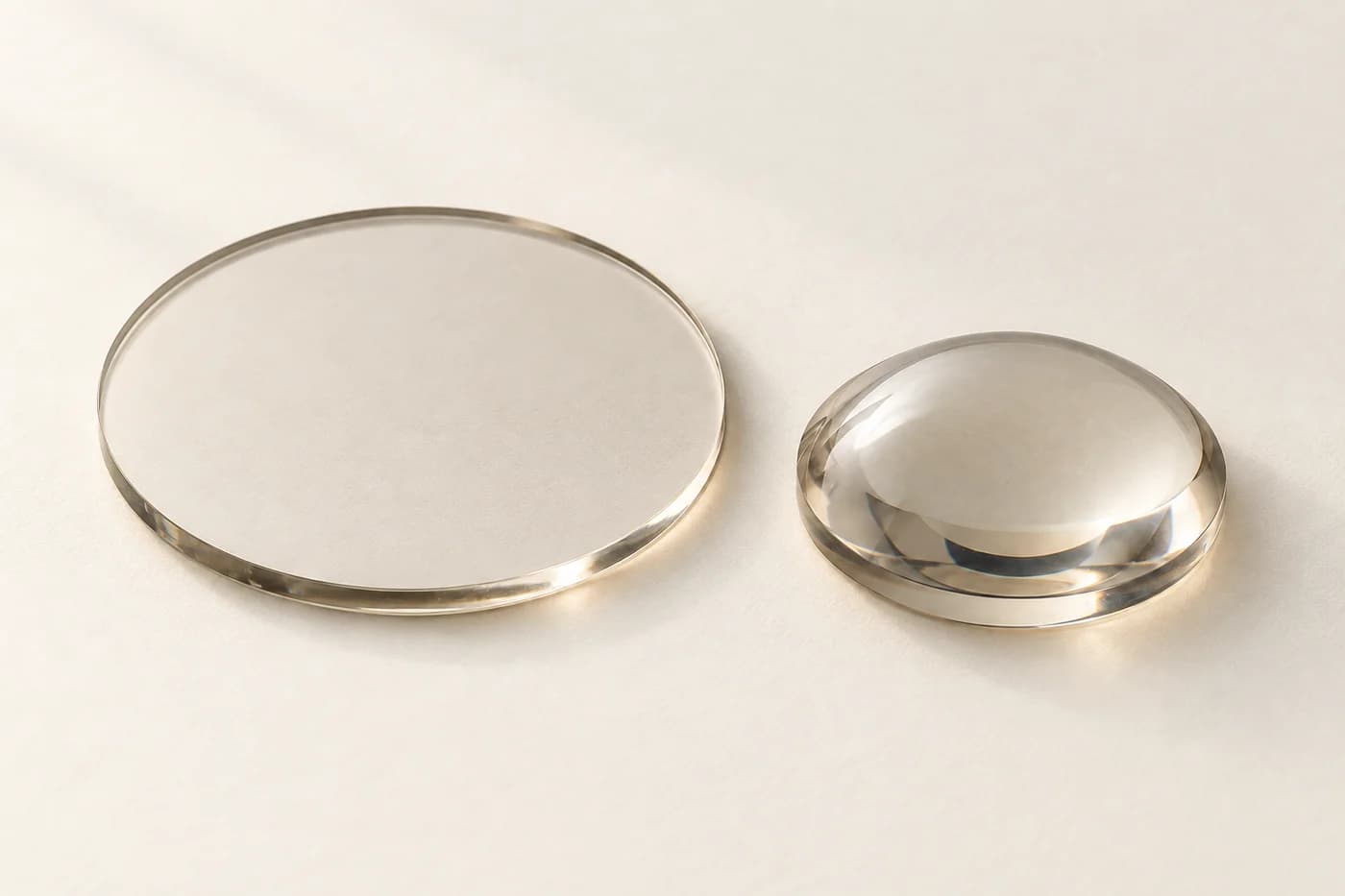
Diamond windows, lenses, plates and beam splitters are specified for your wavelength and aperture.
Cooling with Thermal Components
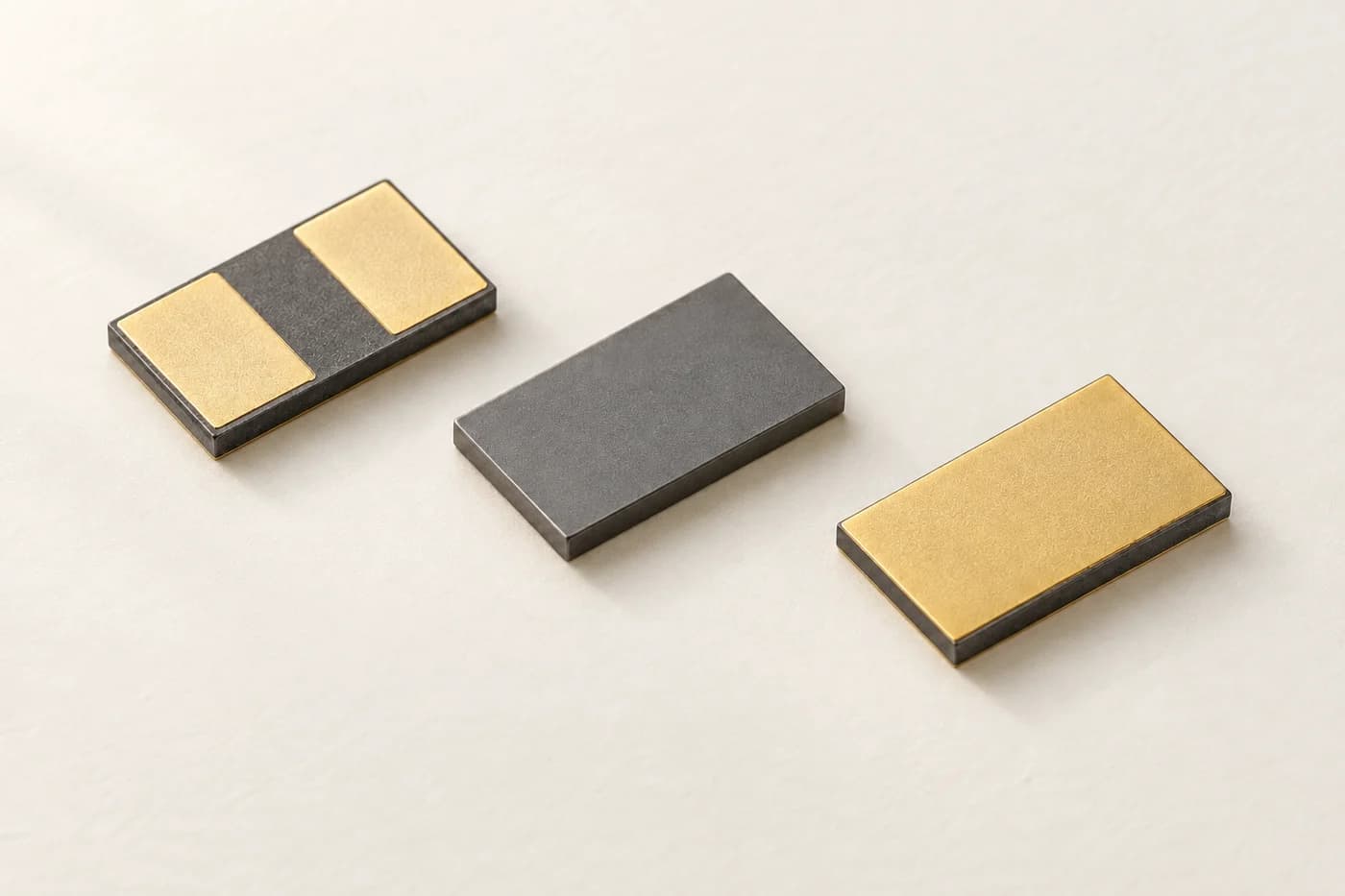
Diamond laser submounts and heat spreaders conduct heat from the laser element.
Bonded gain media
Diamond–Yb:YAG bonded substrates, from Integrated & Bonded Substrates, provide a thermal path directly from the laser crystal.
Relevant products
Common questions
What does optical grade diamond mean?
Optical grade means diamond selected for low absorption in a defined wavelength band. It does not guarantee uniform transmission everywhere. State your operating band and allowable absorption for the actual thickness.
Why use diamond windows for high-power lasers?
Diamond transmits broadly and conducts heat well, so a window can pass a beam while removing absorbed heat. Coatings, thickness and mounting affect performance and are confirmed during technical review.
Can diamond be bonded to a laser crystal?
Yes, diamond can be bonded to materials such as ytterbium-doped YAG to create a thermal path. Interface loss and surface figure are critical, so we review your crystal geometry and coatings first.
Other applications
Requirement to review
Define the next step. Together.
Bring the application, the constraints and the outcome you need. We’ll help scope the engineering review.